Symphony of the Americas
Some concerts entertain. Others linger—quietly recalibrating something internal long after the final note fades. Shall We Dance?, presented by Symphony of the Americas, belonged firmly to the latter. It was an evening where music was not simply heard, but felt—physically, mentally, and emotionally—reminding us that classical music, at its best, is a living, responsive art form.
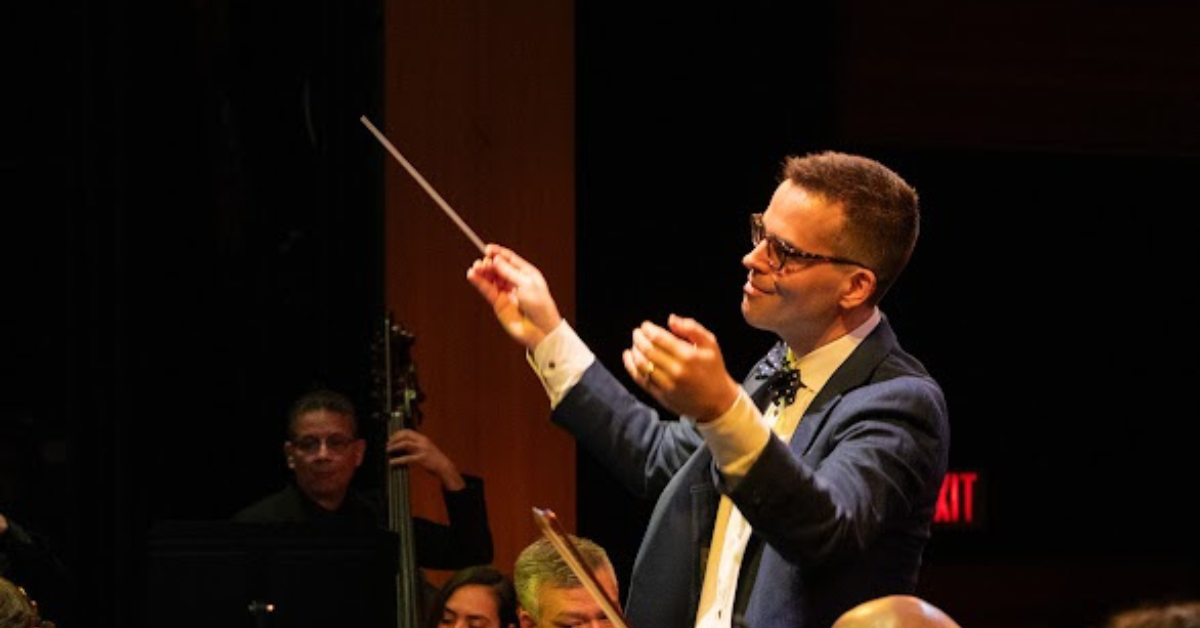
Conducted by Luke Fraser, Artistic and Music Director of Symphony of the Americas, the program unfolded with clarity, warmth, and intention. Fraser led the orchestra with precision and openness, shaping the evening not only through his conducting but through thoughtful narration between pieces. His passion for the music was evident and contagious. Each introduction offered context without interruption—inviting the audience to listen more deeply, to understand more fully, and to remain curious throughout the journey.
Classical music is often described as timeless, but its power extends beyond nostalgia or tradition. Its structures engage the brain on multiple levels at once—activating memory, emotion, pattern recognition, and motor response. Tempo and harmony influence breath and heart rate; phrasing and progression mirror cognitive processes themselves. Listening becomes a full-body experience, one that aligns frequency, focus, and feeling. Throughout Shall We Dance?, those classical foundations expanded into rhythm-driven interpretations, reinforcing the idea that movement has always lived within the music.
That connection between sound and motion came vividly to life through Tommy Sutter, whose tap performance transformed rhythm into physical expression. A professional dancer with remarkable musical sensitivity, Sutter did not dance to the orchestra—he danced with it. His footwork functioned as a percussive instrument, responding to orchestral phrasing with intelligence and restraint. Tap, so often underestimated in classical settings, revealed itself as a sophisticated rhythmic language—precise, collaborative, and deeply musical. The energy on stage was immediate and electric.
In recent years, Symphony of the Americas has evolved into an orchestra defined not only by technical excellence, but by accessibility and community connection. Under Fraser’s leadership, programming feels intentional and welcoming—rooted in tradition while actively inviting new audiences into the experience. This approach is especially effective within the intimate setting of the Amaturo Theater, whose cozy scale dissolves the distance between performers and audience. Every gesture, every breath, every dynamic shift feels personal. The result is a shared experience rather than a formal presentation.
The most resonant moment of the evening came with the inclusion of middle school and high school students, who joined the orchestra on stage. This was not symbolic outreach—it was meaningful participation. By welcoming young musicians into the performance itself, Symphony of the Americas reinforced its role as both cultural leader and community home, nurturing the next generation of classical artists through experience rather than abstraction.
Shall We Dance? was more than a concert. It was a reminder of what classical music can be when it is allowed to move—across bodies, across generations, and across expectations. Long after the applause faded, what remained was a quiet internal resonance: sound, movement, and meaning settling into harmony.
Similar Posts

Funding the Arts at Home, Pulling Back Abroad

Artists Are Not Being Replaced by AI—And the Fear Misses the Deeper Truth
New World School of the Arts Alum Leonardo Castañeda Selected for the 2026 Whitney Biennial
Crossroads of Culture: Highlights from Art Basel Miami Beach 2025

Spotlight Series: Artists who took center stage during Miami Art Week

Savor the Season: Bulla Gastrobar Unveils a Spanish-Inspired Fall Menu

The Sound Inside Us: How Music Rewires the Mind and Restores the Soul
The Colosseum’s New Encore: From Gladiators to Global Music Stages
Experience World-Class Performances for Less with Tomorrow's Stars
Miami's Lincoln Road Turns Into a Free Open-Air Sculpture Garden for Miami Art Week 2025

From Sacred Rituals to Global Stages: A Living History of Theater